
Deer
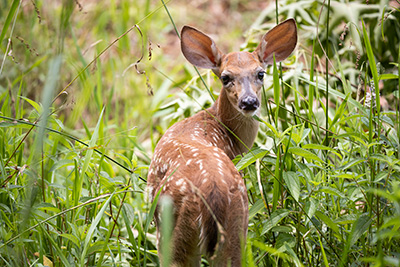
Looking outside and spotting deer in your yard can be an exciting occurrence. Many people enjoy catching a glimpse of these shy creatures. However, your joy may be clouded should you later find plants have become a buffet for your garden visitors.
Deer Damage
If you’re noticing damage to plants in your yard, and you think deer might be the culprit, there are a few signs you can look for. Damage to plants that is high off the ground is one indicator that deer may be to blame. Deer can reach various parts of plants as high as 6 feet up from the ground, a height that generally rules out other animals.
The appearance of the damage is another good indicator of what kind of animal is doing the chewing. Damage done to plants by deer shows as ragged ends on twigs, stems and leaves; because deer don’t have upper incisors, they tear or jerk away the plant material they are eating. For a broader look at the damage various animals can do to plants, read the UF/IFAS publication, How To Identify the Wildlife Species Responsible for Damage in Your Yard.
Exclusion: Fences
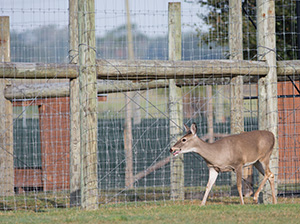
Fencing off your landscape, or parts of your landscape, is one way to protect your plants from deer. Permanent fencing options vary widely in cost, so you may want to look into a few options before deciding if fencing off areas from deer is feasible for your landscape. Plastic (polypropylene) mesh can be used to temporarily deter deer from ornamental plantings and fruit trees. This temporary fencing is draped over vulnerable plantings to prevent deer from snacking. Another option is to attach the mesh to vertical or slanted fences or even posts to create a barrier around landscape plantings. Any fencing should be at least 6 feet high, as deer can and will clear any barrier lower than that in order to get to tasty plants.
Avoidance: Repellants
While a variety of deer repellants can be found on the market, it is important to note that these rarely completely eliminate deer damage. The efficacy of repellants will vary depending on factors like your location, availability of food for deer and the number of deer in the area. This, coupled with the high monetary and labor cost of repellant application, makes the use of these products a better short-term option rather than long term.
You may find home remedies for keeping deer away from your plants; while these may not be as costly as commercial repellants, they will also have varying levels of success depending on your particular landscape and are unlikely to completely keep deer out of your yard. Instead of investing time and money into repellant application, many people who experience repeated deer damage choose to look for plants that are naturally deer resistant.
Deer-resistant Plants
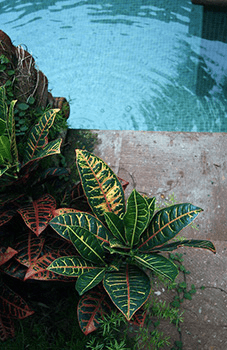
Deer feeding preferences will vary by area, so finding a “deer-proof” plant is less an exact science and more of a guessing game of trial and error. While truly deer-proof plants are hard to identify, there are a number of plants that have been determined to be deer resistant. Deer generally avoid especially fragrant plants and those with heavily textured foliage or thorns.
If you’re looking for trees that are less likely to become a buffet for deer, try one of these: bottlebrush, sabals, crapemyrtle, edible fig, loquat, live oak, magnolia, orchid tree, pineapple guava, pomegranate, queen palm, royal palm and yaupon.
For deer-resistant shrubs try: banana shrub, bird of paradise, camellia, croton, gardenia, ixora, boxwood, juniper, lantana, mahonia, oleander, philodendron, plumbago, tea olive, viburnum and wax myrtle.
These flowering annuals, perennials and bulbs may give you some respite from the deer drama: aloe, angels trumpet, black-eyed Susan, century plant, cone flower, crown of thorns, butterfly ginger, marigolds, peace lily, periwinkle, petunia, sage, shasta daisy, Turk’s cap, verbena and yucca.

As with any gardening question, your county Extension office is often able to help answer questions related to your specific area. Hopefully with some thoughtful plantings you can have a landscape that allows you to admire any deer that pass through, without fearing the damage they may cause.
Also on Gardening Solutions
More from UF/IFAS
- Ask an MGV: Deer Gardening–UF/IFAS Blogs Leon County
- Camera Trapping for Wildlife–Ask IFAS
- Dealing with Deer in Panhandle Landscapes–UF/IFAS Blogs Calhoun County
- Oh Deer! Heliopsis Saves the Day–UF/IFAS Blogs Citrus County
- White-tailed Deer of Florida in Depth–EDIS Archives
- Wildflowers Susceptible to Deer Damage in North Florida–EDIS Archives
- Wildlife of Florida Factsheet: White-tailed Deer–EDIS Archives