
Underappreciated Native Shade Trees
A good shade tree is a cool addition to any landscape.
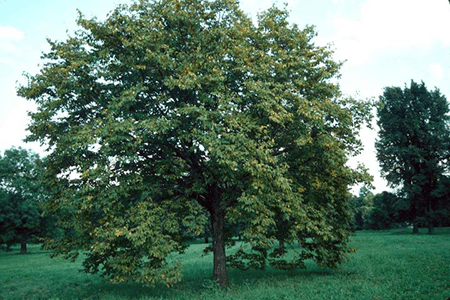
Shade trees not only add visual interest to your yard, their cooling effect is much appreciated here in the Sunshine State. Planting the right trees in the right place can even help reduce energy use in your home.
The following are a few native trees that are not necessarily the first recommended when you ask for a shade tree suggestion, but that doesn’t mean they’re not wonderful choices.
Deciduous Shade Trees
Florida elm (Ulmus americana) is a long-lived shade tree that has dazzling rich, golden yellow autumnal foliage. Trees grow to 60 to 80 feet tall and have an elegant vase-shaped crown. As a bonus, the small leaves on these trees are easy to rake in the fall.
Winged elm (Ulmus alata) is a Florida native that deserves more attention. Named for the distinctive corky “wings” that develop along its branches, this medium-sized tree forms a rounded canopy that provides excellent shade without overwhelming a residential landscape. It adapts well to many soil conditions, tolerates drought and serves as an important host plant for several butterfly species. Its smaller mature size also makes it a good choice for average-sized yards.
Hophornbeam (Ostrya virginiana) is an attractive tree with a rounded or oval crown. Its attractive bark, yellow fall color, and small wildlife loving nutlets that appear in the summer give this tree year round interest. This tree typically grows 25-40 feet tall making it perfect for smaller yards.
Evergreen Shade Trees

Gumbo-Limbo (Bursera simaruba) is native to South Florida and can reach 60 feet tall, although it is usually smaller in the landscape. The bark on this tree is particularly interesting as it is red and peeling. This semi-evergreen tree is great for providing shade in zones 10B to 11.
Hollies can make great shade trees in Florida landscapes. Dahoon holly (Ilex cassine) generally grows to 20 to 30 feet tall while East Palatka holly, a hybrid cross between I. cassine and I. opaca, grows to be 30 to 45 feet tall. Female hollies produce berries which are a bird favorite.
Southern magnolia (Magnolia grandiflora) is much loved for its creamy white and fragrant flowers that bloom in spring and summer. These trees can grow up to 90 feet tall depending on the cultivar and make great shade and specimen trees. If you are looking for something a little smaller, shorter-growing cultivars are available.
Sweetbay magnolia (Magnolia virginiana) differs from Southern magnolia by having smaller flowers and leaves with silvery undersides. Sweetbay magnolias are generally found in swamps and wet soils. The trees grow to between 50 and 90 feet tall.
Wild tamarind (Lysiloma latisiliquum) is a fast-growing tree native to South Florida. With smooth bark and an elegant branching habit, its delicate, fern-like foliage creates an airy canopy, offering filtered shade. This tree can grow up to 30 to 60 feet tall and 50 feet wide. Wild tamarind is tolerant of wind and salt, making it an excellent choice for coastal landscapes.

Also on Gardening Solutions
More from UF/IFAS
- Campus Tree Tour: Hophornbeam–UF/IFAS School of Forestry, Fisheries and Geomatics Sciences
- Campus Tree Tour: Winged Elm–UF/IFAS School of Forestry, Fisheries and Geomatics Sciences
- Eastern Hophornbeam–Florida 4-H Forest Ecology
- Lysiloma latisiliquum: False Tamarind–Ask IFAS
- Ostrya virginiana: American Hophornbeam–Ask IFAS
- Ostrya virginiana, American Hophornbeam–Landscape Plants
- Ulmus alata, Winged Elm–Ask IFAS
- Winged Elm–Florida 4-H Forest Ecology