
Silver Buttonwood
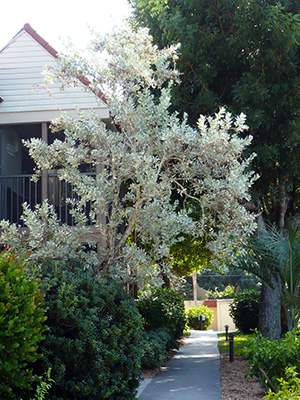
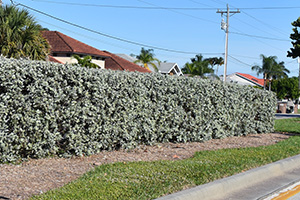
This Florida native is quite a silver fox, with silky hairs that cover the surface of its leaves, giving the tree a shimmer. It’s a perfect evergreen to plant along street edges or sidewalks, as it adapts well to urban environments. Silver buttonwood (Conocarpus erectus) also serves well as a hedge, accent or windbreak.
Characteristics
This low-branching, shrubby tree can reach up to 40 feet, but generally grows 15 to 20 feet tall in the Florida landscape. Its high salt tolerance and ability to thrive in sandy soil makes it an ideal tree for near the coast. Silver buttonwood is also a shape shifter; its structure will contort when located near seashore winds, taking a picturesque appearance. When planted one-half mile or more from the coast, its crown is more symmetrical.

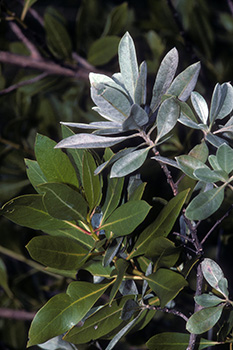
The leaves are small, about 2 to 4 inches long, and appear blue-green to silvery gray. These leaves can reflect the moonlight or other soft lighting at night, enhancing an evening stroll. Clusters of small, greenish-white flowers bloom periodically throughout the year, followed by reddish-brown fruits that resemble small cones. The bark is scaly, rigid and dark brown, and the wood has historically been used for firewood, cabinetry and charcoal. Its wood is also used for smoking meats and fish.
Planting and Care
Silver buttonwood grows well in South Florida and can be planted in USDA Hardiness Zones 10B through 11. It can handle various types of well-drained soil and is quite tolerant of drought conditions. This tough plant can handle the Florida sun, performing well in full light to part-shade conditions.
Pruning is required for a strong structure. If you want it to have symmetrical, upwards growth, you can plant a single-trunk tree and prune to maintain its form.
Silver buttonwood is free of major disease problems, but can have issues with sooty mold on trees inland from the coast. As an inland alternative, you can plant the smooth-leaved, green buttonwood that’s less prone to the mold.
If you are looking for a charming native tree with interesting form for your coastal landscape, look no further. Or maybe you just need a specimen tree with unique coloring — silver buttonwood could be just the ticket.
Also on Gardening Solutions
More from UF/IFAS
A Note on Names
You may notice some sources refer to the silver and green buttonwoods with different botanical names. The Atlas of Florida Plants and other trusted sources recognize Conocarpus erectus as one species with a wide range of “fuzziness.” We generally try to follow the Atlas, since this is the most comprehensive and accessible source on plants that are native or naturalized in Florida.