
Cut Flowers for Cool Weather
Winter weather might drive us indoors, but that doesn’t mean we can’t take some flowers with us.
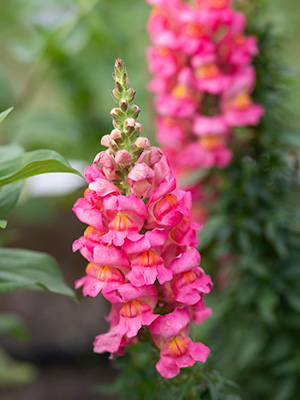
Cut flowers make excellent centerpieces, adding color and cheer to the home. And while many gardeners take advantage of Florida’s temperate winters to grow vegetables, our cooler weather also provides the right conditions for flowers too.
Before jumping into your cut-flower garden’s planting schedule, it’s important to consider preferred temperatures, hardiness zones and growth time required until “harvest.”
For cool-season flowers, you generally want to plant from September through February, depending on the species. You must get the seeds or transplants in the ground at least 6-8 weeks before the first expected frost. It is a good idea to keep a cut-flower journal with information such as the date and amount planted, the flower variety, color and type, and whether they were directly sowed or transplanted.
For many cool-season bloomers, it is the length of darkness, not the length of daylight, that affects the productivity of a plant. “Short-day” plants bloom when nights are longer than 12 hours, while “long-day” plants bloom when nights are shorter than 14 hours.
Accordingly, short-day plants do better in winter, but can be affected by artificial light during the night. This light impacts their growth and prevents blooming, which is why it is important to allow your cool-season flowers to experience darkness throughout the night.
Most flowering plants can be cut to enjoy inside, but some produce longer-lasting cut flowers than others. Below are some recommended flowers for growing in your Florida winter garden that work well in a vase.
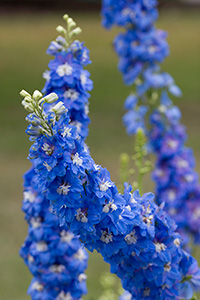
Delphinium
Some delphinium (Delphinium spp.) have true-blue petals, which is rare in the plant kingdom. If blue is not your hue, you can find delphinium in other colors like yellow, pink and white. Delphinium also has delicate, lacy foliage that can add a soft texture. Starting in March, delphinium produces spikes of blossoms that are great for cutting and using in arrangements. Within the same family is the larkspur, which can be sown directly and usually blooms about 11-14 weeks after planting. Larkspur seeds should be stored in the fridge for about week before planting, a preparation method known as cold stratification.
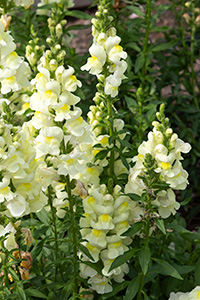
Snapdragon
Snapdragons are lovely both in the garden and in a vase. They range in size from only 6 inches high to 3 feet tall and come in red, yellow, orange and even maroon. You can plant snapdragons once weather cools in the fall.
The seeds should be chilled in the fridge for 3-5 days before sowing and then need light to germinate (so don’t cover with soil). Look for cultivars that are meant to be grown as cut flowers. Some will do better in our warmer temperatures, such as the ‘Potomac’, ‘Rocket’ and ‘Madame Butterfly’.
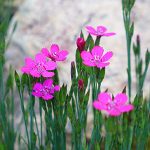
Dianthus
Dianthus (Dianthus spp.) is great for cut-flower arrangements, providing cheerful color and a pleasant fragrance. Dianthus species include “pinks,” carnations and Sweet Williams. Most parts of the state should wait until October to plant in flower beds. Dianthus will flower through winter and spring, only stopping when temperatures rise, usually in May.
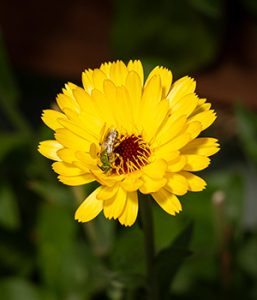
Calendula
Also called pot marigold, calendula (Calendula officinalis) produces cheerful, daisy-like flowers and forms a dense, rounded shape. Calendula flowers are either single or double and can be yellow or orange.
The flowers are also edible and can be used as a garnish. Just don’t eat the center of the flower or the calyx (the green part that encloses the flower) because they are bitter. The flowers will be ready to harvest roughly 55 days from planting.
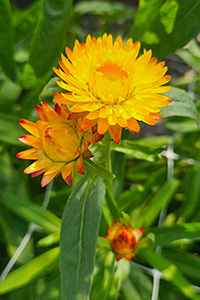
Strawflower
Strawflower (Xerochrysum bracteatum) sports flowers with a yellow central disk surrounded by glossy bracts (leaves resembling petals) that can be orange, pink, burgundy, yellow or white. The bracts are quite stiff and straw-like, hence the common name. The flowers last a long time when cut and also maintain their color and form when dried.
This plant can begin as direct seed or transplant and requires light to germinate. The flowers will be ready to harvest 75 to 85 days after planting, but wait until the bracts are almost completely unfolded before cutting. Strawflower grows best in Central and South Florida.
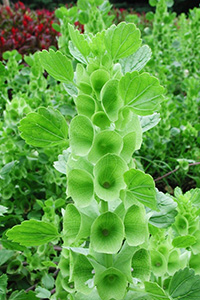
Bells of Ireland
Despite its name, this plant is not native to Ireland, but in fact native to western Asia. It develops showy, green bell-shaped calyces (modified leaves) encasing tiny white flowers, clumped along a flower spike.
Bells of Ireland (Moluccella laevis) is excellent as both live-cut and dried arrangements in the home. It can be planted as direct seeds or transplants, but you must chill the seeds 1-2 weeks prior to sowing. The flowers will be ready to harvest about 90 to 110 days after planting.
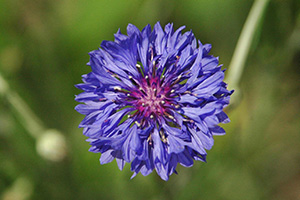
Bachelor’s Button
While it comes in several fun colors, bachelor’s button (Centaurea spp.) might be best known for its striking true-blue flowers that last a long time as cut arrangements. Interestingly, the scientific name was derived from the word “centaur.” You must chill the seeds one to two weeks prior to sowing, and once planted flowers will be ready to harvest in 80 to 90 days.
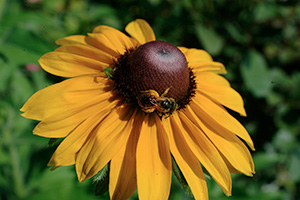
Black-eyed Susan
This Florida native is a tough wildflower with a sunny disposition. Its bright yellow flowers make perfect floral arrangements and attract butterflies in the garden. Black-eyed Susan (Rudbeckia hirta) is tolerant of both salt and drought, making it an excellent choice for coastal landscapes. You can plant in October, and the flowers will mature in 90 to 105 days. Light is required for germination.
Long-lasting Cut Flowers
Once you’ve brought your flowers inside, remove any leaves or blossoms that will end up under water. Cut one-half to one inch off the stems at a 45-degree angle with a sharp, clean knife. Place them in a clean vase filled with fresh water and add some flower food. When the water starts turning yellow and cloudy, wash the vase with soapy water and add fresh water with flower food. Re-cut and rinse the stems before placing them back into the container.
For more information on growing any of these plants or growing other flowers for cutting, contact your county Extension office.
Ralph Waldo Emerson once said, “the earth laughs in flowers.” Cut flowers are an excellent way to harvest this joy and bring warmth to any room.