
Protecting Trees During Construction
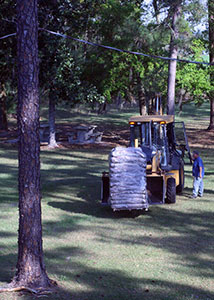
If you’re building a new home, think about which trees on your property should be saved and protected. By preserving existing trees, you’ll increase your home’s value, provide important habitats for wildlife and you may even save energy.
Which trees should be saved?
Choose strong, healthy trees that have a single trunk and are free of defects. Younger trees tolerate construction better than older trees, and studies show that groups of trees survive better than single specimens.
What steps should you take to protect the trees?
Trees and their root systems must be protected from damage during the construction process. It’s the tree’s roots that take in the essential water and nutrients. Protect your tree’s roots by setting up fencing to prevent heavy vehicles from damaging trunks and running over the root zone causing soil compaction. Protection should extend all the way out to the “drip line,” the outer edge of the leafy canopy.
Soil compaction is not the only hazard. Paving over or dumping fill on the soil around a tree can also cause serious damage. Depending on the tree species, a portion of the root zone could be compacted or paved over and the tree will remain healthy. Ask a tree expert about the ability of that tree species to withstand soil compaction or pavement underneath the drip line. Be sure the soil grade remains constant. Removing soil or adding fill dirt can end up killing the tree.
Find out how construction debris and chemicals are being discarded; there should be designated zones for disposal of them, away from any trees meant to be preserved. Construction materials can be toxic, leeching chemicals into the ground.

Caring for your protected trees
Take special care of your trees. Stressed trees need plenty of water during the construction process, and this means watering each tree about 2–3 times per week. Adding a layer of mulch will help keep that water in the root zone.
Also on Gardening Solutions
More from UF/IFAS
- Construction Phase – Protecting Trees and Conserved Natural Areas–Ask IFAS
- Post-construction Phase—Urban Trees Can Reduce Household Carbon Footprint–Ask IFAS
- Tree Preservation During Land Development–UF/IFAS Urban Forestry