
Phlox
A favorite of both pollinators and gardeners, phlox are no longer common in nurseries, but still worth adding to your garden.

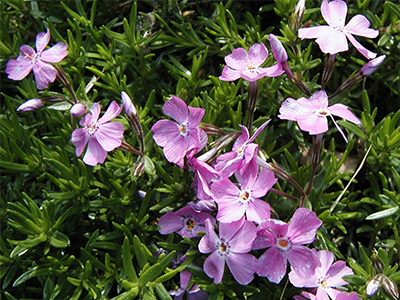
Roadside stands of wild phlox blend in with the grass most of the year, but in late winter and spring these plants burst forth with color. Flowers vary from red and lavender to pink and white.
Many of the plants seen along highways are part of the Florida Department of Transportation’s (FDOT) Wildflower Program. Often identified as Phlox drummondii (Drummond phlox), this species is native to Texas but has naturalized throughout the region.
There are three main varieties: annual phlox, garden phlox and creeping phlox. Annual and creeping phlox are native to North America, while garden phlox is native to the Eastern US. Phlox thrives in North Florida and can grow as far south as zone 10.
Cultivars include ‘Crimson Beauty’ (red flowers), ‘Emerald Cushion’ (pink flowers), ‘Millstream’ (white flowers with a crimson eye), ‘Millstream Daphne’ (dark blue flowers), and ‘White Delight’ (white flowers). These are all cultivated varieties; wild phlox has a great amount of variation.
Plants grow to only 6 inches tall, form thick clumps and make a good groundcover; a practical use is as a stabilizer for sloping landscapes. Phlox also make an attractive presentation cascading down a wall.
As far as maintenance goes, cutting back foliage after flowering can encourage denser growth and sometimes a weaker second flower display.
For more information on phlox and other Florida wildflowers, contact your county Extension office.
Also on Gardening Solutions
More from UF/IFAS
- Downy Phlox, Phlox pilosa–Florida Museum of Natural History
- Roadside Rainbows: Annual Phlox Brightens Spring and Lifts Spirits–UF/IFAS Blogs Taylor County