
Passalong Plants
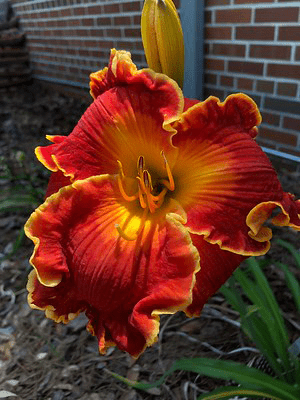
One of the great pleasures of gardening is sharing information with family members, friends and neighbors. But perhaps the best benefit of sharing with other gardeners is receiving and giving passalong plants.
A Southern gardening tradition, passalong plants are easily propagated, often unavailable at a retail nursery, and “passed along” to other gardening friends. Each holds a story of where it came from and the loving hands that grew it.
Many old varieties, such as heirloom vegetables, are available only as passalong plants from other gardeners, who have often cultivated them for generations.
Interested in passing some of your own plants along? The general rule for dividing plants is to propagate them opposite their blooming season — so plants that bloom in the fall should be divided in the spring, and vice versa. Save seeds as they mature and make cuttings throughout the year to pass along to your favorite gardeners.
Some plants that are easily propagated are listed below. These are great gift-giving ideas for friends and family!
Crinum Lilies
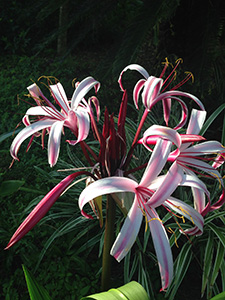
Crinum lilies produce fragrant flowers that gently nod atop stalks reaching 2 to 5 feet tall. The blooms vary in color depending on the species and variety, with white, pink, deep rose or striped petals. They make great cut flowers for adorning the home. Crinum americanum, also called swamp lily, is a Florida native that thrives along the banks of ponds and streams. Crinum lilies are easy to divide, and plant divisions will bloom more quickly than offshoot bulbs. When dividing, ensure that the basal plate (bottom) of the bulb is not damaged and that the roots are intact. You also must make sure the bulbs don’t dry out while they are establishing. Crinum lilies are best divided in the winter when they are not actively growing.
Daylilies
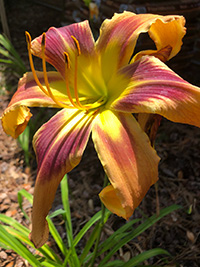
Daylilies bloom for roughly four to seven weeks, with various colors offered across different species and varieties (yellow, orange, red, pink, purple and creamy white). They are also available in different growth habits and flower shapes. Some are evergreen, while others are deciduous. Lucky for you, they can multiply fast and are easily propagated at home.
To create more daylilies through division, dig them up immediately after they finish flowering. Cut the leaves off about 6 inches above the crown and divide the clump with a sharp knife. These new sections can be used as a passalong. Prune the roots to promote new root development. Daylilies can also be propagated using the small plantlets that sometimes (not always) develop on the flower stems.
Swamp Sunflower

Swamp sunflower (Helianthus angustifolius) is a Florida native with bright yellow flowers that bloom throughout the fall. It is a perfect choice for any pollinator garden, as the flowers are especially attractive for bees and butterflies. It’s a mounding plant that grows 2 to 6 feet high and spreads readily through rhizomes (underground stems). Once these rhizomes send up shoots, this new growth can be dug up and divided to be shared. This is generally done in the spring or after it blooms in late fall. Swamp sunflower can also be distributed through saved seeds.
Ornamental Gingers
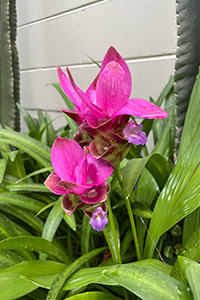
Ornamental gingers are known for their attractive foliage and long-lasting, colorful blooms. Butterfly gingers (Hedychium coronarium) sport fragrant, waxy flowers in white, pink, orange or red tones. Peacock gingers (Kaempheria spp.) are known for their unique leaves with bold markings of bronze, purple or silver. Pinecone ginger (Zingiber zerumbet), also known as shampoo ginger, has quite a “wow” factor, with flowers inside bracts that resemble red pinecones. Other options include spiral ginger and tulip ginger.
These plants spread via rhizomes, which can be dug up, divided and shared . It is important to include as much root as possible when dividing. You can divide early in the growing season (early spring to summer).
Irises
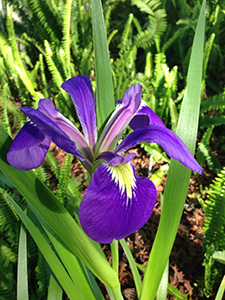
Irises make excellent passalong plants, as they awe gardeners with their intricate beauty and showy flowers. There are a few species that perform well in Florida, including blue flag iris (Iris virginica), which is an aquatic Florida native with blue-lavender spring blooms. The walking iris gets its intriguing name from the stalks of new plantlets that extend towards the ground. The African iris and Louisiana iris are additional options well-suited for the Sunshine State.
Similar to the daylily, you can divide irises by digging up the plant anytime after it has bloomed, then cutting the clump into sections. Plantlets that sometimes arise from the flower stems can also be used as a passalong plant. For irises, you don’t have to prune the roots and leaves when dividing.
Aloe
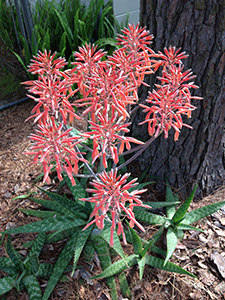
Aloe (Aloe vera) is a hardy succulent that requires little care or maintenance. It can be grown indoors or outside, and the gel within its leaves can be used to soothe minor burns and sunburns. Soap aloe (Aloe maculata) is another aloe plant that can be propagated. This tough, Florida-Friendly plant produces red, orange and yellow tubular blooms that attract hummingbirds.
Aloe plants produce new side shoots, or “pups,” which are baby plants that grow from the base of the parent plant. To propagate, remove the side shoots, making sure to choose a full plantlet with plenty of leaves and well-formed roots. After propagating, it is preferable to wait a week before watering to allow the roots to heal (callus) and prevent root rot.
ZZ Plant
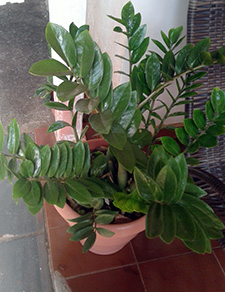
Commonly known as “ZZ plant,” Zamioculas zamiifolia makes an excellent houseplant and gift. It has a bold, tropical look with glossy green leaflets. It is quite adaptable and can be grown in bright or low light. In warmer regions of the state, it can also be planted outdoors. This unique plant can be easily propagated via leaf cuttings, stem cuttings and rhizome division. Propagations should be placed in well-drained potting media and kept moist, but not overwatered.
Passalong plants make wonderful gifts during the holidays and other celebrations. They can be a meaningful way to share some plant love and pass along the good cheer.
More Passalong Plants on Gardening Solutions
- Blood Lily
- Bulbine
- Cannas
- Crocosmia
- Four O’clocks
- Heirloom Vegetables
- Hurricane Lily
- Lion’s Ear
- Passion Flower
- Peacock Gingers
- Persian Shield
- Yesterday-Today-and-Tomorrow