
Hydrangeas
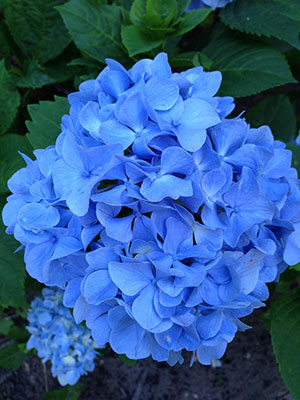
Hydrangeas (Hydrangea macrophylla), sometimes called French hydrangeas, are large shrubs with beautiful masses of color. They fill shady areas in gardens with their green, leafy foliage and incredible blooms during the warm months.
The two kinds of French hydrangeas offer different looks to a garden. “Mop heads” have big round, dense balls of showy flowers that add a bold statement, whereas “lace caps” are more subtle and elegant. Newer cultivars that reflower are also available, which provide color again and again.
There is also Hydrangea paniculata, which has smaller leaves and thrives with morning sun. It is the most cold-hardy of the hydrangeas. Panicle hydrangea, as it’s sometimes called, can grow quite large and can even be trained as a small tree. Its showy white blossoms last longer longer than French hydrangeas. The ‘Limelight’ panicle hydrangea has white flowers that turn a bright, light green.
The native oakleaf hydrangea (Hydrangea quercifolia), has deeply lobed leaves resembling large oak leaves. It’s an excellent shrub for shady areas, with cone-shaped white flowers that aren’t quite as showy and dense as “mop heads.”
Planting and Care
Best for North and Central Florida, French hydrangeas require shade, moist and fertile soils, and cool winters. As with most flowering plants, good site selection and plant care is important. Avoid wet areas and don’t plant too deeply or root systems will be stressed and unable to function properly. Once established, French hydrangeas need minimal care. They’ll grow to several feet in height and can be three to five feet wide.
While pruning isn’t necessary, if you’d like to shape your hydrangea, late summer is the best time, since most of these hydrangea types flower only from the end buds of upright or lateral shoots produced during late summer and fall of the previous season. Prune as soon as the flowers have faded and strong shoots are developing from the lower parts of the stems and crown. Weaker shoots at the base, both old and new, can be removed, but try to keep several stems of old productive wood with stout new stems; these will flower the following season.
Pests and Other Problems
In general, healthy hydrangeas do not experience many problems, but some pests include aphids and mites, which can be controlled by pruning affected branches or applying horticultural soaps and oils. The bigger problem, both figuratively and literally, are deer; if they’re common in your area, their feeding will damage hydrangea. Of the diseases that affect French hydrangea, only powdery mildew and leaf spot are typically encountered in the garden.
Changing Hydrangea Color

Hydrangeas that are planted in acidic soils will produce blue flowers, while those planted in alkaline soils will have pink flowers (except cultivars that are genetically bred to be either pink or pure white). Soil pH doesn’t affect the color of the panicle hydrangea.
If your hydrangea is producing blue flowers and you want them to be pink, you’ll need to incorporate lime into the soil. To turn pink flowers to blue, use aluminum sulfate. Remember that it may take two or three blooming cycles before the flowers reach the desired color and color intensity.
For more information about growing hydrangeas and other landscape questions, contact your county Extension office.

Also on Gardening Solutions
More from UF/IFAS
- French Hydrangea for Gardens in North and Central Florida–EDIS Archive
- Hydrangea paniculata: Panicle Hydrangea–EDIS Archive
- Hydrangeas for North and Central Florida: Bigleaf and Mountain Hydrangeas–EDIS Archive
- Q&A: Why isn’t our hydrangea blooming? Botrytris Blight–UF/IFAS Blogs Nassau County
- Q&A: What is wrong with my hydrangea leaves? Cercospora Leaf Spot–UF/IFAS Blogs Nassau County