
Geraniums
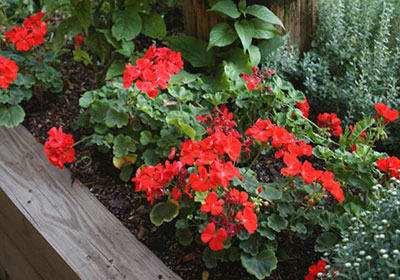
Garden geraniums (Pelargonium x hybridum) are popular and attractive flowers. Their bright red, white or pink flowers can be used to fill a bed or combined with other plants for colorful accents.
Geranium flowers form a globe-shaped cluster that stands above rounded, green foliage. Red-flowering varieties attract hummingbirds and pollinators like bees.
In other parts of the country, geraniums are briefly enjoyed as short-lived summer annuals. They cannot tolerate a freeze, but they also do poorly in heat and humidity. We can still plant geraniums in Florida, it’s simply a matter of timing. In North Florida, plant your geraniums early in the year, after the danger of frost, to take advantage of cool spring temperatures. In South and Central Florida, where geraniums are used as a winter annual, plant them from October to March.
Geraniums grow best in full sun, but will tolerate partial shade. Remove old flowers to keep new ones coming. Geraniums prefer well-drained soils. Work a three- to four-inch layer of organic matter such as compost or peat moss into the soil when planting.
Space your plants 12 to 24 inches apart to form a solid, colorful ground cover. Geraniums grow well in pots and planters with adequate drainage. Mulch will help retain moisture and prevent weed growth.
You can start with plants purchased at a garden center; geraniums can also be propagated from cuttings or started by seed. Geranium seedlings are slow-growing, but reportedly have better form and are available in cultivars with higher heat tolerance and disease resistance.
Scented Geraniums
Don’t overlook another pelargonium, grown not for its flowers but instead the foliage. Scented geraniums have long been favored for their fragrant leaves, which release aromatic oils when rubbed or crushed. They can smell like mint, rose, lemon, cinnamon or even chocolate.

In Victorian times, people would float the leaves in small bowls of water as a way to cleanse their hands before eating, earning the plants the name “fingerbowl geraniums.”
The leaves and flowers of scented geranium are also edible and can be used to flavor sugars, jellies or baked goods. Harvest leaves and flowers throughout spring, summer and fall. The leaves can be dried but lose some of their color and scent.
Like their flowerbed cousins, scented geraniums can be grown outdoors in containers, and just like garden geraniums, they struggle in summer’s heat and will need to be protected from frost. Pests of both geraniums include whiteflies, thrips and spider mites. Manage by hosing off with water. Diseases to look out for include root rot, verticillium wilt rust and leaf spot.
A note on names — While commonly called geraniums, this genus (Pelargonium) is only one in the large geranium family (Geraniaceae), which also includes the genus Geranium. The plants in that genus are often referred to as “hardy geraniums” or “cranesbills.” They are not typically cultivated as garden plants. Taxonomists believe that the plants we refer to as garden geraniums are cultivated hybrids.
Botanical confusion not withstanding, these timeless flowering plants are widely available in garden centers and plant catalogs. For more information about geraniums, including planting advice and cultivars suitable for your region, contact your county Extension office.