
Flowers: Dianthus
Dianthus
Consider these charming cool-season plants for your winter flowerbeds
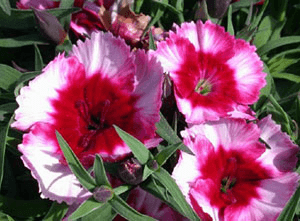
(Dianthus x ‘Super Raspberry Parfait’). UF/IFAS
The genus Dianthus includes more than 300 species of flowering plants. Three types of dianthus are most common. Carnations (Dianthus caryophyllus) are popular in the floral industry for bouquets, but tend to be less hardy than other dianthus. Sweet William (D. barbatus) is a biennial or short-lived perennial. Pinks (D. chinesis) are low-growing annuals. Pinks, and hybrids bred from pinks, are the most commonly planted.
Pinks are bushy plants with gray-green leaves and small flowers that can be single, semi-double or frilled, in shades of lavender, pink, purple, red, salmon and white. Flowers are held on stems about an inch to 2 inches tall, with toothed petals creating a delicate fringe. Pinks get their name not from the color, but from their fringy petals that look like they’ve been cut with pinking shears. Some species have a spicy fragrance that some gardeners have compared to cloves. Dianthus may be used in borders or containers, and make great bedding plants when massed together.
Most parts of the state should wait until October to plant. Dianthus will flower through winter and spring, only stopping when temperatures rise, usually in May. It does best in full sun to partial shade, and prefers rich, well-drained, soil. It will not tolerate wet conditions, so irrigate only when the soil dries out and keep mulch away from the stem. These are low-maintenance plants be sure to deadhead flowers as they fade.
Some recommend varieties are the hybrid Telstar, a low-growing dianthus that comes in several colors, and is reported to be resistant to a common dianthus disease, root rot caused by the fungus Phytophthora. Dianthus ‘First Love’ has fragrant flowers that open white, then turn to pink and eventually lavender. It’s also reported to be resistant to Phytophthora root rot.
Dianthus aren’t just for the garden, either. The flowers are edible! The flavor is clove-like but a little more delicate. When harvesting dianthus flowers, remove the white petal base which is a little bitter. You can add the petals to desserts and fruit salads. As with all edible flowers, it’s best to start from seeds. We don’t recommend purchasing transplants from an ornamental nursery unless you can confirm that the plant is free of any chemical treatments and was grown specifically to be eaten.
For questions on dianthus and other cool-season flowers for your landscape, contact your county Extension office.