
Flowers: antique roses


Antique Roses

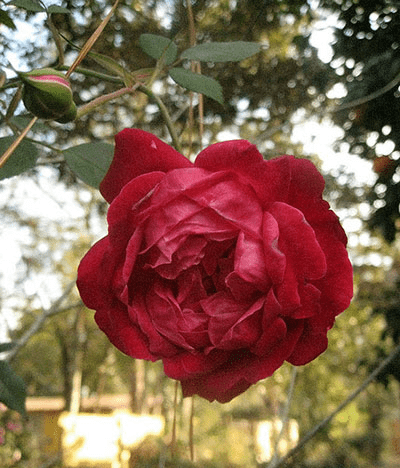
Dark pink rose with many loose petals
‘Monsieur Tillier’ tea rose. Photo courtesy of Matthew J. Orwat.

In Florida, roses can be perceived as difficult to grow, but older varieties, known as “antique” or “old garden” roses, are usually easier to maintain and more disease resistant compared to modern roses. There are some newer cultivars that can be easy to maintain as well, but this article will focus on antique roses.

Due to historical trading enterprises across the world, there are many different types of roses today. The American Rose Society defines an old garden rose as any type introduced before 1867. Anything bred after that is considered a “modern rose.” Antique roses come in a wide range of colors and forms, and many are quite fragrant. Some bloom repeatedly, while others bloom for four to six weeks.

Antique roses and modern roses are further divided into classes. Modern roses are categorized as floribunda, hybrid tea, polyantha and shrub. The antique rose classes include China, tea, noisette, bourbon, Bermuda mystery and species.

As a general rule, antique roses need less maintenance than newer hybrids. They’re often more tolerant of pests and diseases, require less water and fertilizer, and can be grown on their own roots (that is, they don’t need to be grafted).

Below we will discuss the difference between the classes of old garden roses and some recommended cultivars.

China Class

This class of roses originated from Chinese varieties so ancient, they appear in artwork over 2,000 years old. These free-flowering roses thrive in hot climates and are disease resistant. They range in size from smaller shrubs that fit nicely in planters, to much larger plants that can reach upwards of 10 feet tall and wide. China roses bloom best in early spring and late fall, with more sporadic blooms in the summer. These roses can range in color from creamy white to pink to crimson red.

‘Old Blush’– This cultivar blooms throughout the year with partially “double” flowers (more than one layer of petals but not as full as a double bloom) in lilac-pink with splashes of rosy pink. Interestingly, the color will darken with more intense sunlight. It grows upright, reaching 4 to 5 feet. This beauty comes at a price—watch out for the sharp thorns. Aside from that, it is the perfect rose for the beginner and has a delightful apple fragrance. ‘Old Blush’ can occasionally have fungal diseases.

A pinkish-red rose with many tightly clustered petals.
Antique rose ‘Louis Philippe’

‘Mutabilis’– This beloved old garden rose is famous for its “mutating” blooms (hence the name) that transition from yellow to pink to crimson over a few days. It is also known as ‘Butterfly Rose’ for the flowers’ resemblance to brightly colored butterflies. This large shrub is easy to grow with significant heat tolerance and is perfect for the Florida climate. It is also quite disease resistant.

‘Louis Phillipe’– Widely grown in the southern states, this old garden rose is also known as the ‘Florida Cracker Rose’. Its 2- to 3-inch double blooms are a deep crimson with a lovely fragrance. This rose can be found growing in many old homesites and cemeteries in Florida. ‘Louis Phillipe’ is resistant to black spot and chilli thrips. In a UF/IFAS research study, this rose was rated one of the best for Florida.

Tea Class

Tea roses also originated from China and were brought over to the United States in the 1800s. Their scent is reminiscent of dried tea leaves, hence the name. This class has been widely grown in the Deep South for many years. They grow well in Florida as free-flowering shrubs and can withstand the heat and humidity of summer. However, tea roses cannot succeed north of hardiness zone 7. This class of roses usually grow as large, upright plants, while a few will climb.

‘Mons. Tillier’– This free-flowering rose will bloom throughout the growing season. It is a large shrub that makes an excellent focal point in the garden, with its deep pink blooms that fade to an orange hue in cooler weather.

‘Duchesse de Brabant’– This tea rose is also known as the ‘Teddy Roosevelt’ and grows to a height and width of 3 to 4 feet. It sports small “cabbage” blooms of salmon pink, with a dense, rounded form and numerous layers of petals. The flower’s sweet fragrance is equally as enticing, and blooms multiple times a year. This rose does best in hardiness zones 7 through 9.

A pale pink rose with loosely arranged petals
‘Bermuda Spice Mystery’ rose. Photo courtesy of Matthew J. Orwat.

‘Spice’ or ‘Bermuda Spice’– Thought to be one of the ancient Chinese roses imported to Italy in the 1700s, this tea rose is a prolific bloomer of 3-inch double flowers. It delights with white flowers in the heat of summer and light pink hues in the cooler months. The blooms give off a distinctive peppery fragrance. ‘Spice’ reaches 4 to 6 feet tall and wide and maintains a compact form. In the same UF/IFAS research study, this rose was also rated one of the best for Florida.

‘Mrs. B.R. Cant’– This tea rose gets quite large, reaching 8 to 10 feet tall and wide in Florida gardens. The lightly fragrant blooms are “cabbage” form and hold up well as cut flowers. Its hue changes from rose-pink to silvery-pink over time. This tea rose was also rated highly for Florida gardens in the UF/IFAS study.

‘Marie Van Houtte’– This vigorous, spreading rose can grow 6 to 7 feet tall and wide. It is known for its creamy white to light yellow blooms, with a rosy-pink color lining the petal edges.

‘Madame Antoine Mari’– The blooms of this beautiful tea rose are a nice blend of pinks, and its new foliage growth is maroon. It was developed by Antoine Mari in 1901 in Nice, France. This flowering plant reaches up to 6 feet tall and wide and works well as a specimen in the landscape.

Noisette Class

Noisette roses were also brought over to the United States in the 1800s. They have awed gardeners with their honey scent and ease of care for many years. This free-flowering plant can grow as a large bush or as a vigorous climber. Trained onto a trellis, garden arch or fence, noisette roses can add a creative and decorative element to the landscape. The blooms range from small to medium in size, appearing in clusters with soft yellow, cream or pink hues.

‘Champney’s Pink Cluster’– This antique rose features clusters of semi-double to double blooms with a pink hue and a fruity fragrance. They are vigorous climbers and are well adapted for warm climates. It was developed in the Carolinas in the early 1800s by a French immigrant.

‘Blush Noisette’– This rose produces small pinkish-white flowers in clusters. It is a vigorous shrub and can reach 6 feet tall if pruned annually and 10 feet tall if trained as a climber. The scent is an intense honey that can reach noses over 50 feet away.

Species Class

The “species” class of roses consists of those growing naturally throughout the Northern Hemisphere. These plants are also known as “wild” or “botanical” roses. They tend to be very hardy and disease resistant. One cultivar recommended for Florida is the ‘Rosa Banksia’, also called ‘Rosa Banks’. This rose is a rampant climber that can spread 20 to 30 feet. It is nearly disease-free with massive white and yellow blooms.


Old garden roses are a time capsule back to the origin of these diverse flowers. They bring beauty and intrigue into the garden and make excellent, low-maintenance plants. There are nurseries across Florida that sell antique roses and you can even find them in catalogues online. For more information about antique roses, contact your local UF/IFAS Extension agent.

Also on Gardening Solutions

More from UF/IFAS