
Winged Bean

This underutilized legume loves hot and humid Florida.

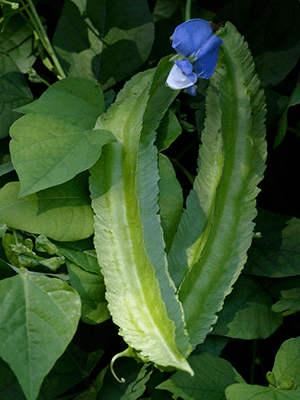
Two long green bean pods with frills running down the sides of the pods, along with one indigo flower
Winged beans and blossoms. Photo by Scott Zona, some rights reserved.

Looking for something different to grow in your edible garden? Take flight with winged beans! Similar in growth habit to pole beans, winged bean (Psophocarpus tetragonolobus) is a climbing plant. Grown around the world, winged bean has many common names, including goa bean and princess bean.

Like pole bean plants, these plants have pointed, 3 to 6 inch-long leaves produced on weak vining stems. Where winged bean differs is in the pod’s appearance. Four angled ruffled “wings” run lengthwise to the pods. The bean pods can grow to be 6 to 9 inches long when mature, with seeds that are round and green, similar to soybeans.

Pods are harvested when they’re 2 to 4 inches long and prepared much like snap beans. In southern Asia and the Pacific region, where winged beans are very popular in home gardens, the leaves, flowers and roots are prepared and eaten as well.

As with other legumes, these bean plants can help add nitrogen to your soils. Ideal for hardiness zones 8-12, they will thrive in South Florida when grown during the winter. In North and Central Florida, plant winged beans in the fall. They are sensitive to frost. Winged bean plants traditionally needed short days to initiate flowering, but “day-neutral” cultivars are available.

Winged bean seeds are very tough; pre-soak the seed for 12 hours in warm water and scarify before planting to encourage germination. Planted in a sunny site, in well-drained soil. Because bean plants have weak root systems, sow your seed directly into your garden and install a trellis or other support structure before you plant. As a tropical legume, winged beans are not drought tolerant, and will need irrigation in dry weather. But their nitrogen-fixing nature means they need little to no fertilizer and they’re practically pest- and disease-free.

Winged beans are very nutritious, rich in protein, vitamin E and calcium. All parts of the plant are edible, including the tuberous roots, with some varieties bred for their tasty roots. While the mature beans carry the most nutrients, their hard shell means they must be cooked longer than more common beans like kidney beans.

Also on Gardening Solutions

UF/IFAS Publications