
Lettuce
Winter is the perfect time to grow lettuce in Florida.
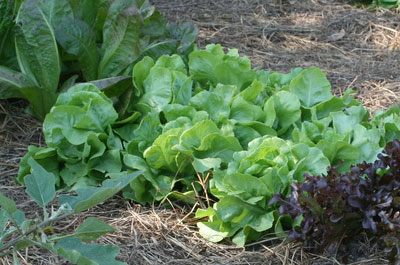
Lettuce is a widely loved leafy vegetable in the sunflower family (Asteraceae), starring in many fresh salads and sandwiches across the country. It’s also the second-most grown vegetable in the United States, just behind potatoes. Here in Florida, we rank as the third-largest producer of lettuce in the U.S. And of course, it makes an excellent option for an edible Florida winter garden.
Characteristics
In the United States, four major types of lettuce (Lactuca sativa) are grown: crisphead, butterhead, leaf and romaine. All can be grown in Florida, but leaf lettuce often works best since it’s more suited to our mild climate.
Leaf lettuce produces leaves that are loosely arranged on a stalk. Good leaf lettuce selections for our state include ‘Black-seeded Simpson’, ‘Red Sails’, ‘New Red Fire’, ‘Royal Oak’ and ‘Salad Bowl’.
Romaine lettuce has the most upright growth pattern of the main types of lettuce and is known for its distinct, crunchy midrib. Three cultivars of romaine that do well in Florida include ‘Parris Island Co.’, ‘Valmaine’ and ‘Dark Green Cos’.

In contrast to romaine’s crunchiness, butterhead lettuce is known for its soft, delicate leaves with a sweet flavor. Recommended butterhead lettuce cultivars include ‘Ermosa’, ‘Bibb’, ‘TomThumb’ and ‘Buttercrunch’.
Crisphead, better known as iceberg lettuce, is pale green in color with compacted leaves, layered tightly in a ball. The texture is crunchy with a mild and slightly sweet flavor. ‘Great Lakes’ is a recommended cultivar for Florida.
Lettuce is a great source of vitamins such A and K and provides a good amount of C. The darker green or red leaves of some lettuce varieties provide more nutrition than the varieties with lighter green leaves. Lettuce contains 95% water — which dilutes nutrients — so you must consume large portions to obtain the most benefits.
Planting and Care
Winter is the perfect time to grow lettuce in Florida. The exact months you should plant depend on where you live, so check with your local UF/IFAS Extension office or the Florida Vegetable Gardening Guide on Ask IFAS for planting dates. As a cool-season crop, lettuce prefers temperatures between 50° and 75° F. It does not perform well in hot weather; too much heat can cause it to bolt prematurely, leaving you with bitter leaves. When temperatures are above 85°, keep lettuce under afternoon shade or use a shade cloth. For better results, consider planting heat-tolerant varieties. Lettuce can tolerate light frost, but in conditions below 40°, cover with a frost blanket to extend the growing season.

Start your lettuce crops from seed or transplants. Try planting in the ground, in raised beds, containers or even in a floating hydroponic garden. Space transplants 6-8 inches apart, except for crisphead, which needs at least 10 inches. If seeds are broadcast over the entire bed, make sure to thin out the seedlings as they come in to make more room for growth. Plant in a sunny spot, as lettuce requires at least 10 hours of sunlight per day.
You should keep the soil consistently moist; just be sure not to overwater, as soggy soils can cause diseases. Well-drained soil prepared with added compost will keep your lettuce healthy. It prefers slightly acidic soil with a pH of 6.0 to 6.5. When planting, you may apply a balanced, slow-release fertilizer. Weed-control fabrics and mulch are great ways to keep unwanted plants at bay. Common pests include aphids, slugs and snails.
Harvesting Lettuce
Lettuce grows quickly and should be ready to harvest within 4-6 weeks of planting. When harvesting leaf, butterhead and romaine lettuce, cut the larger outer leaves first and allow the inner leaves to develop; this will prolong the harvest period. It is also okay to cut the entire head of lettuce about 2/3 of the way down, leaving the base and central growing crown; you should be able to harvest this way multiple times. Alternately, crisphead lettuce plants can only be harvested once (as the whole head), since the leaves form tightly together and don’t grow back.
Harvest lettuce when the leaves are still young and tender for the best flavor and texture. The inner leaves are usually more delicate than the outer leaves, which have a sturdier texture. You can even create baby-leaf mixes by harvesting the leaves when they are small, perfect for mixing with other leafy vegetables such as spinach, kale and chard. Crisphead lettuce can be stored in the refrigerator for 2-3 weeks while other types stay fresh for up to a week, preferably bagged in the crisper drawer to preserve moisture.

UF/IFAS Research
In Florida, lettuce for commercial production is primarily grown in the rich “muck” soils of the Everglades Agricultural Areas (EAA). The lettuce breeding program at the UF/IFAS Everglades Research and Education Center has historically worked with growers in these areas to produce cultivars that address challenges such as disease and increasing temperatures. As a result, researchers have released beneficial lettuce types over the years and are currently working on disease-resistant and heat-tolerant cultivars. They also aim to identify lettuce varieties that efficiently absorb nutrients and are resilient to stress.
Lettuce is a wonderful, fresh vegetable option for garnishing dishes, serving as a base to a meal, or adding crunch and texture to sandwiches and wraps. It is an excellent winter crop and a staple for any edible garden.

Also on Gardening Solutions
- Cool Season Vegetables
- Five Fall Vegetables for the Home Garden
- Harvest as You Grow Containers
- Hydroponic Vegetable Gardening
- Red Leafy Vegetables
- Vegetable Bolting
More from UF/IFAS
- Florida Vegetable Gardening Guide–Ask IFAS
- Growing Lettuce in Small Hydroponic Systems–Ask IFAS
- Healthy Harvest: Florida Brassicas, Cruciferous Vegetables and Leafy Greens–Ask IFAS
- Leaf Lettuce: Planting and Care–UF/IFAS Blogs Leon County
- The Lettuce Breeding Program at UF/IFAS
- “Set It and Forget It” Hydroponic Lettuce–Ask IFAS
- More lettuce articles on Ask IFAS