
Petscaping
“Petscaping” is a fairly new term being used in discussions of landscape design that make special consideration for pets.
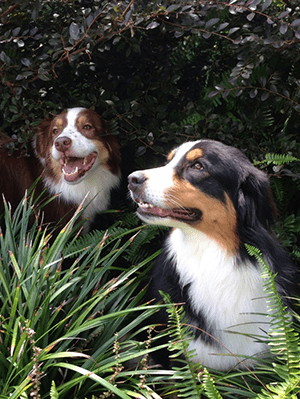
The idea is to protect beloved animals from poisonous plants and harmful chemicals, while also keeping those cherished landscape plants safe from curious—and sometimes destructive—pets.
Do…
Create areas for your pet to run and play. Dogs love lots of space to run around and play, either by themselves or with you. Give them a safe area with a soft surface that will feel great under paw.
Use paths to direct your pet to and away from different areas of your landscape. While a path will not force your pet to go a specific direction, they can help you train them where they should and shouldn’t be in the garden.
Use low borders and raised beds for planting areas. While an ambitious pet can overcome these barriers, they still can serve as a deterrent as your furry friend is learning where they can and can’t play in the garden. Placing one- to three-foot-tall decorative metal fences around landscape beds will discourage most dogs from running through them.
Protect tender plants by creating densely planted areas. Use hardy shrubs and perennials to shield delicate, vulnerable plants.
Buy plants in 1-gallon pots or larger when adding to your landscape. Having a larger plant to start with will help give it a fighting chance against a curious creature who wants to explore the new addition.
Look for mulch that is both comfortable under paw and isn’t going to get stuck in the coat and dragged inside. Small cedar chips are gentle on the body while being heavy enough that they don’t get caught up in fur.
Don’t…
Don’t use landscape plants that could make your four-legged companion ill, or worse. Some common landscape plants to avoid are allamanda, croton, angels trumpet, and oleander. A few more to watch out for are listed in our article Deadly Plants. Even widely planted species like king sago can be toxic. Spanish bayonet isn’t poisonous, but it is sharp, and should also be kept away from areas where pets will roam. It’s a good idea to check the ASPCA poisonous plants list before adding new plants to your landscape.
Don’t have easily accessible compost. While the idea of your pet playing in compost may simply seem gross, it’s also dangerous should your pet decide to eat some of those old vegetables.
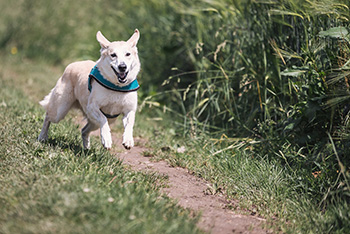
Don’t forget about potentially harmful bugs in your yard, like ticks and mosquitos. You can reduce tick populations by removing leaf litter and keeping turfgrass mowed to the recommended height. For mitigating mosquito populations, be sure to check your landscape for areas of standing water, flush out bromeliad plants, and regularly change the water in bird baths. Doing these mosquito-maintenance checks weekly is important in keeping the populations of these flying menaces down.
Don’t forget to check the labels for any fertilizers, pesticides, or any other chemicals you might use in your landscape. Pet-friendly fertilizers and pesticides are often labeled as such.
If you want to get creative, look to dog parks and other pet parents for inspiration. The most important thing is to create a space you and your animal companion will be able to enjoy in safety and harmony.