
Iguanas as Garden Pests
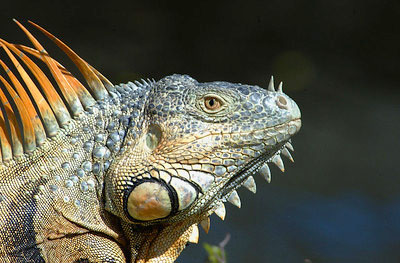
As a result of the exotic pet trade, iguanas have made their home in South Florida. In this subtropical climate they are causing problems in both residential and commercial landscapes.
Why don’t we welcome these exotic visitors? Iguanas can damage landscape plants, hardscapes, and even permanent structures. These lizards also leave a mess behind. Adult iguanas may even bite, scratch, or slap with their tail if they feel threatened. Luckily, homeowners hoping to discourage their visits have plenty of options.
Iguana-proof Your Landscape
Iguanas spend their time in open areas and landscape brush, as well as on sidewalks, docks, and seawalls. They leave feces scattered in areas where they bask, an unpleasant sight and smell. The feces may also be a source of salmonella bacteria. Iguanas usually avoid people but will defend themselves when threatened.
You can choose to simply ignore these exotic creatures, but you should never feed iguanas. Doing so will attract more and support a nuisance population. To prevent iguanas from climbing, install sheet metal around trees and dock pilings. To discourage basking iguanas, create a displeasing atmosphere — spray them with a hose or make loud noises to drive them from your property.
Protect Your Plants
Iguanas cause harm to the landscape by eating plant foliage; the ones you find grazing on landscape plants are likely adults. Juvenile iguanas tend to eat small animals like lizards, insects, and birds.
To prevent iguanas from eating vegetation, gardeners can modify their gardens. Guard valuable plants with cages or screened enclosures. Grow species that iguanas dislike, especially tough, thick-leaved plants. Other repellant plant species include milkweed, citrus, and oleander. Avoid planting species that attract iguanas. Greens, squashes, melons, hibiscus, roses, and pink pentas are among the plants most attractive to iguanas.
Discourage Burrowing
Burrowing iguanas present another set of problems. They dig burrows under the foundations of permanent structures. Over time these burrows increase erosion, making the foundation and structure above unstable.
Create an L-shaped barrier with wire to stop iguanas from digging underneath plants and structures. You can also pack empty burrows with concrete or sand. Do this during the day when animals are not inside. Another option is to provide alternative nesting sites. Piles of mulch or sand near sea walls are good nesting options.
Capture and Removal Guidelines
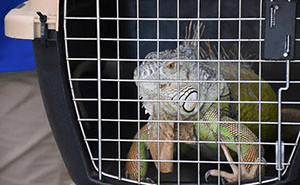
Iguanas are considered exotic, unprotected wildlife. As such, they can be captured and removed from private property without a permit. Iguanas may be caught by hand, noose pole, net, or traps. Live traps and snares are the only traps legal in Florida, and should be used only as a last resort. In the winter, cold-stunned iguanas fall to the ground as temperatures drop. Collecting them can be as easy as picking them up off of the ground.
Since it is illegal to release invasive species in Florida, captured iguanas must remain in captivity. Unfortunately, wild adult iguanas are dangerous and hard to keep as pets. Few live donation options are available to homeowners because there are too many iguanas being captured. Consequently, wildlife rehabilitators don’t have the resources to care for them.
If iguanas cannot be sold, donated, or kept in a secure place they should be humanely euthanized. Though invasive, iguanas are protected by anticruelty laws. Homeowners should seek the help of pest management professionals to ensure that the euthanasia process is carried out legally and ethically. Acceptable methods may be found in Dealing with Iguanas in the South Florida Landscape.
Whatever your wildlife pest questions, UF/IFAS is here to help. Contact our staff and volunteers at your county Extension office.