
What Is Drought?
A drought is a period of abnormally dry weather that causes a water shortage or jeopardizes our water resources.
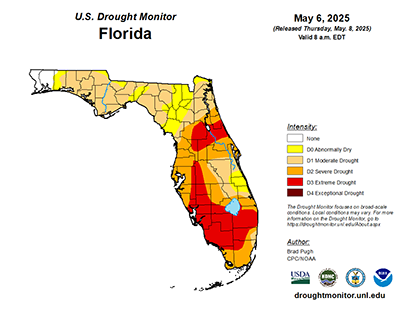
We tend to expect that every time we turn on the faucet plenty of fresh, drinkable water will flow out. But Florida’s population is growing quickly, and at the same time, we’ve been experiencing dry years. As the population grows, our water demands increase, too.
Where We Get Our Water
The water most Floridians use for drinking, showering, watering the lawn, washing the car, and many other things comes from the Floridan Aquifer, an underground cave system made of porous limestone called karst. This groundwater comes to the surface naturally via the more than 600 springs throughout the state. And, of course, we pull it into our homes with pumps and wells.
Florida’s aquifers depend on rainwater to keep it recharged. In dry years, the water level in the aquifer system goes down. Streams, lakes, and wells can dry up. But many areas of the state are near sustainable limits of water withdrawals even in normal years, so dry years can stress the system even more.
We Need Rain
In a typical year, Florida gets an average of 53 inches of rain per year. The dry season in Florida usually starts in November and continues through May. Typically the summer is the wet season, but the past few summers have been dry. This means that water levels in the aquifer system are especially low, making water restrictions a necessity in several of Florida’s water management districts, which manage the state’s water resources.
As Florida’s open spaces are increasingly paved over by new development, there’s less ground for rainwater to soak into. Rain that lands on pavement evaporates into the air or flows into stormwater drains that flow into streams or stormwater collection systems that drain into the sea. This water does not replenish the aquifer.
It’s always important to conserve water, and there are many ways to use less water in the landscape. You can find tips for saving water in your landscape in Dealing with Water Restrictions.