
Integrated Pest Management (IPM)
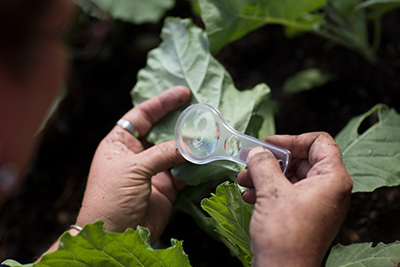
Integrated pest management, or IPM, is a comprehensive approach to managing plant pests. IPM uses many different methods to cause the least harm to people, property, and the environment.
IPM’s emphasis is on the management of problems, rather than their eradication. Pesticides are only one weapon in the arsenal of IPM practices, and they are typically used only after a number of other tactics have been tried.
Avoiding Pest Problems
Prevention is the key to IPM. This means always selecting the right plant for the right place, choosing pest-resistant varieties, and maintaining healthy plants with appropriate watering and fertilizing strategies.
- Think before you plant. Plants in locations not suited to them may be stressed and thus more susceptible to pests.
- Start early. IPM begins at planting time, with the selection of plants that are pest-free and pest-resistant.
- Keep your plants healthy. Using appropriate amounts of water and fertilizer is the best defense against pests.
- Conduct regular scouting. Keep an eye on your yard’s plants to detect pest problems early, before significant damage occurs.
- Go easy on water and fertilizer. Too much of either can cause excessive growth, making plants vulnerable to some insects and diseases. Encourage healthy growth by applying fertilizer and water only when they’re needed and in moderate amounts.
- Mow to the proper height and prune selectively. Mowing grass too short and severely pruning trees and shrubs weakens them, potentially inviting problems.
- Encourage beneficial insects. Learn to recognize the insects in your garden that help manage pests and let them continue their good work!
Detecting Pest Problems
Inspecting plants frequently helps detect pest problems early. You can give plants the once-over anytime you water by hand, mow, or do other outdoor chores. Set aside a time twice or more each week to walk through your yard and look at plants. Some small insects complete their life cycles in one week, so a weekly wander through the yard may not be frequent enough.
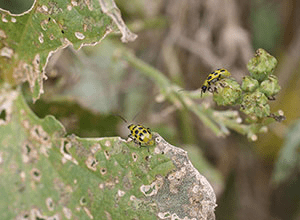
Common plant pests in Florida include aphids, mealybugs, scales, whiteflies, thrips, plant-feeding mites, caterpillars, and chinch bugs. Often you will spot evidence of a pest’s activity before you see the insect itself. If you see chewed or deformed leaves, sooty mold, many ants scurrying up and down plant stems, or discolored “trails” on leaves, you are likely to find a pest lurking somewhere.
Detecting small insects and mites can be difficult. One method that works well is to flick the leaves of small branches against a sheet of white paper. Use a ten-power (10X) magnifying glass to search for movement or evidence of pests. Chinch bugs can be collected from lawn thatch using a shop vacuum.
Look on the branches and on both the upper- and undersides of leaves for pests that attach to the plant, such as scales and whitefly nymphs. Sooty mold on leaves is a telltale clue to an infestation by what are known as piercing-sucking insects (aphids are one example). These pests pierce the plant with sharp mouthparts and suck the sap. Some piercing-sucking insects secrete a sugary substance called honeydew, on which the black-colored sooty mold fungus grows. Sooty mold doesn’t injure a plant directly, but it does block sunlight from leaves, reducing photosynthesis. Ants also signal the potential presence of pests, since they feed on honeydew and often protect the insects that produce it.
If you see plant damage but few pests, beneficial insects may already be working on your behalf. These may include lady beetles (commonly called ladybugs) and their larvae, lacewings and their larvae, assassin bugs, spiders, parasitic wasps, and parasitic flies (syrphid or hoverfly larvae and tachinid flies).
Treating Pest Problems
IPM is the best strategy for dealing with pest management, and it relies on the use of chemicals only as a last resort. Check out these IPM techniques.
- Remove affected leaves or plant parts. When pests are heavily concentrated on a plant, you can often reduce or eliminate the problem by simply removing the affected leaves or stems.
- Pick insects off by hand. This easy step can often defeat infestations of large, slow-moving pests. Dispose of any captured insects so they do not return to feed again. Try one of these methods:
- Drop pests into soapy water or isopropyl alcohol.
- Place them in the freezer overnight (in a baggy or plastic container).
- Crush them and put them in your household trash.
- Look for beneficials. If you see a pest outbreak, determine if it’s being managed by natural enemies already present. Many beneficial insects prey on pests, and harming them will just help the pests.
- Don’t treat by default. Plants with aesthetic damage don’t necessarily need to be treated. Consider the amount of damage you’re willing to accept. Remember that there will always be insects in any healthy landscape, and don’t worry about minor damage.
- Start with low-impact techniques. Always try the safest alternatives first, such as handpicking insects or pruning affected parts of a plant. If pesticide use does become necessary, choose products that are the least harmful to people, pets, and wildlife. These products include insecticidal soap, horticultural oil, botanicals (e.g., pyrethrum, neem, and rotenone), microbials (e.g., spinosad, abamectin, and Bacillus thuringiensis), and entomopathogenic nematodes (small worms that kill insects).
- Avoid using broad-spectrum insecticides. They’re not selective, meaning they also kill beneficials. Instead, choose targeted products, which are designed to harm only specific pests. For example, products that contain an extract of the bacterium Bacillus thuringiensis ‘Kurstaki’ are used to manage caterpillars without affecting other organisms.
- Spot-treat only. Use pesticides to treat only the affected areas of a plant or lawn. Never use blanket applications to treat problems.
- Read and follow all label instructions. Be careful and remember that the label is the law!
- Apply pesticides during the cooler part of the day. Heat combined with soaps, horticultural oils, and other pesticides can injure plants.
- Use products only on recommended plants. Always read the label to find out which plants a product can be applied on and which plants are sensitive to the product. If you’re unsure about applying a product to a plant, test it on a small area of the plant first. Check for leaf burn in the tested area after one to two days. Phytotoxicity, or chemical injury, often looks like a burn on the edge of leaves.
If a pest problem persists, take a sample of the damaged plant and pest to your county Extension office for identification and suggestions on control. For more information about specific yard pests, diagnosing pest problems, and controlling pests, visit University of Florida IPM online.
Also on Gardening Solutions
- Beneficial Insects: Lacewings and Ladybugs
- Biopesticides: Bt and Spinosad
- Biopesticides: Horticultural Oils
- Citrus Psyllid Wasp
- Natural Pest and Disease Management
- Tomato Insect Pest Management
- Trap Cropping