
Providing Water to Wildlife
Surface water sources such as puddles, raindrops on leaves, and dew on grass provide much of the water used by wildlife. Animals also get water from the foods they eat. But clean, fresh water that’s accessible to wildlife can often be hard to find, especially during a drought.
Birdbaths and small ponds are excellent ways to provide water for animals. And they can beautify the landscape, as well.
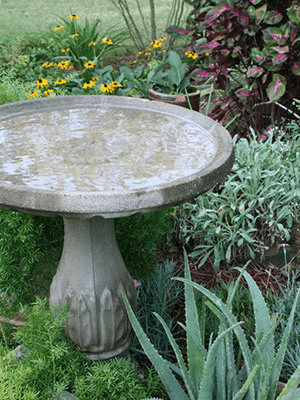
Birdbaths
Birdbaths are the most popular way to provide water for wildlife. They can be homemade or commercial models. Birdbaths should be placed so that predators can’t sneak up on unsuspecting users. Keeping brush cover nearby offers protection and perches where birds can preen. Just be sure not to have low shrubbery too close—cats will use it for ambushes. In general, the lower the birdbath, the more open space there should be around it.
Birds prefer baths with textured bottoms for firm footing. You can cover smooth bottoms with pebbles or sand. Water in a birdbath should be no deeper than two to three inches in the middle, and the sides of the bath should slope gently so birds can easily climb in and out.
Birdbaths are available in materials as varied as concrete, terracotta and plastic. Concrete models are expensive and cumbersome, but provide excellent footing for birds and will not budge in severe weather. A plastic birdbath may need to be secured against strong winds.
Wash your birdbath regularly with soap and water; rinse well with warm water after cleaning. Some birdbaths can be washed with a very weak bleach solution (1 part chlorine bleach to 10 parts water), but concrete birdbaths should be washed with soap and warm water only (no chlorine). This isn’t just to keep the birdbaths looking nice; UF/IFAS researchers warn that diseases can be transmitted between birds at birdbaths.
This is especially important in the summer — birdbaths should be flushed with fresh water at least once a week to eliminate mosquito larvae from developing.
Butterfly Watering Stations
Butterflies have special requirements for drinking. They take in liquids through their proboscis, a long, hollow tube that is sort of a modified tongue.
These insects are often seen “puddling,” or gathering at damp, sunny spots, where they draw moisture from mud or sand. Butterflies are incapable of drinking freestanding water, such as in a birdbath.
Use a coffee can or similar container to make a butterfly watering station. Put several inches of clean sand or earth in the bottom, sink it into the ground, and fill it with water. Place rocks in the middle and at the sides for use as landing pads. Change the water regularly to keep mosquitoes from breeding there.
Ponds and Pools
A garden pond can attract a variety of wildlife. One with aquatic plants as well as vegetation around its edges is ideal. Animals that might be attracted to your garden pond include turtles, frogs, birds, snakes, lizards and raccoons.
You can create a pond with a rubber liner, pre-formed pond, or a large tub—materials readily found at most garden centers. There are many easy-to-grow water plants; make sure you choose ones that will thrive in the light conditions and size of your pond. Consider incorporating koi or goldfish into your pond—but if you expect wildlife, make sure you create hiding places for the fish and don’t get too attached to them!
Make a small watering hole in your yard for animals. You’ll be rewarded with fascinating sights and beautiful sounds, and you’ll help them survive dry times!