
Carambola
Nutritious and eye-catching, this tropical fruit makes for a tasty treat and interesting garnish.
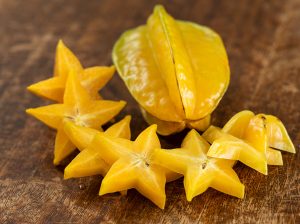
Carambola (Averrhoa carambola L.), also called star fruit, is native to Southeast Asia but has been grown in Florida for over 100 years. Older varieties of carambola tend to be quite tart; new, sweeter cultivars are available thanks to seedling selection and vegetative introductions from Thailand, Taiwan and Malaysia.
Carambola trees are evergreen, although when grown in cooler locales they can lose some or all of their leaves during late winter and early spring. The star fruit tree will grow to heights of 20 to 30 feet tall and 20 to 25 feet wide if not pruned. These trees generally have a multi-branched bushy, rounded canopy. The leaves run 6 to 12 inches long, each with groups of small green leaflets.
Fruits are fleshy, with a yellow, waxy edible peel; the seeds are edible as well. When fully ripened, star fruit is crisp and sweet, and a good source of vitamins C and A, phosphorus and potassium. Slices of the fruit look like stars — hence the celestial name. The fruits tend to be 2 to 6 inches in length and generally grow in the mid-canopy area in mature trees.
Seeds lose viability within a few days of removal from the fruit, so if you’re hoping to plant them, be sure to get them sown right away. However, trees started from your own tree’s seeds may end up with tart fruits and could take years before becoming productive due to seedling variability and the need to reach maturity. Buying named cultivars and grafted trees from a local nursery is recommended to ensure your fruits are sweet.
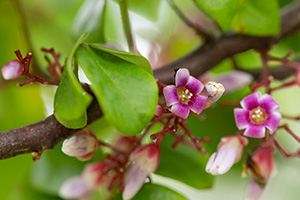
The small flowers that precede fruiting are pink to lavender-colored and “perfect,” meaning they have both male and female reproductive parts that allow them to self-pollinate. With that being said, some cultivars still require cross-pollination for optimal fruiting. Carambola has two major blooming periods: April through May and September through October. Some trees may also bloom during other parts of the year.
Planting and Care
You can grow star fruit in South Florida, particularly in the southeastern and southwestern counties. However, this plant is not ideal for coastal properties as it is not tolerant of salt. Plant your star fruit in full sun at least 20 to 30 feet away from other trees as well as buildings, structures and power lines.
Along with warm to hot temperatures, this plant needs well-drained, moist soil and protection from the wind. The trees respond well to pruning and can be kept at a size of 12 feet by 12 feet through light annual pruning. If pruned to 12 feet or less, carambola can better tolerate windy conditions. It can handle heavy rains and has a tolerance for flooded soils, withstanding 2-10 days of these conditions (depending on the health of the tree). But this tree can be significantly damaged during cold and freezing temperatures. Carambola does best between 68 and 95°F.
Carambola is not drought tolerant and may need supplemental irrigation. Water regularly when the tree is establishing, and once it begins to reach fruiting age, irrigate during the period between flowering and harvest. Young trees should receive mixed fertilizer (containing nitrogen, phosphorus, potassium and magnesium) every 30 to 60 days. Once trees mature, you can switch to four to six applications a year.
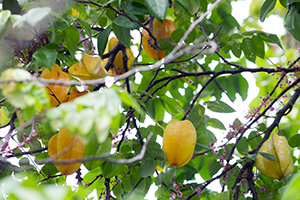
Harvest star fruit from June to February. There are peaks in fruit production: August through September and December through February, and sometimes during other parts of the year. Some cultivars of star fruit can produce two to three crops per year. The fruit is sweetest when allowed to fully ripen on the tree.
Carambola fruits should be picked when they turn from green to yellow, with some green still visible along the tips of the ridges (ribs). Young trees produce about 10 to 40 lbs. of fruit per year, and by year five they could be producing 100 to 150 lbs. of fruit. Trees seven to 12 years old can produce up to 350 lbs. of fruit a year.
Carambola can have issues with pests such as scale insects, stink bugs and fruit blotch miner. Potential diseases include leaf spot, red alga, fruit-rotting fungi and root rot.
Star fruit is definitely a giving tree — with loving care, it can provide a bountiful harvest of delicious fruits. This tropical plant is well worth it and could become a rewarding addition to the South Florida landscape.
A Note of Caution
People who have been diagnosed with kidney disease should not eat star fruit unless their doctor says that it is safe for them to eat. This fruit contains oxalic acid, which is known to cause kidney issues in significant amounts.
Also on Gardening Solutions
More from UF/IFAS
- Carambola Growing in the Florida Home Landscape
- Cultivando carambola en el jardín de su hogar en Florida (Spanish)
- Video: FruitScapes – Carambola (YouTube, from the classic UF/IFAS tropical fruit series)
- Webinar: Tropical Fruit Tuesdays – Carambola (YouTube, UF/IFAS Extension Miami-Dade)