
Tropical Spinaches
Finding edible plants to grow in the summer garden can be a real challenge. Turning to some of the less well-known vegetables can be just what Florida gardeners need to keep their edible gardens producing through the summer heat.
Tropical “spinaches” include Malabar spinach, Okinawa spinach, longevity spinach and more. While not true spinach (Spinacia oleracea), which is a cool-season crop, these tropical leafy greens can be harvested all summer long.
Malabar Spinach
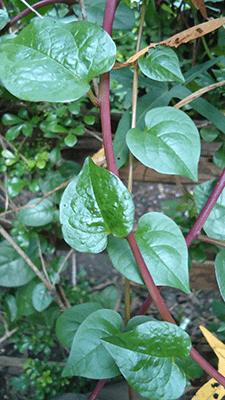
Malabar spinach (Basella spp.) has many other common names including Ceylon spinach, climbing spinach, gui, acelga trepadora, bretana, libato, vine spinach and Malabar nightshade. This vining plant’s edible leaves resemble those of spinach and can be used the same way.
Malabar spinach is originally from India and is widely cultivated in the tropics, especially in moist lowlands. The plants grow best during warm, rainy periods as moisture is important. When cooked, Malabar spinach is less slick in texture than other greens. In Bengali cuisine, it’s popular cooked with chopped onions, hot chilies and a little mustard oil.
A small amount of shade is beneficial for these plants, although they can be grown in full sun. Malabar spinach grows well from either seeds or cuttings, and the vines will perform best when grown on a trellis. Two plants will generally produce sufficient quantities of leaves to provide a small family with greens during summer and fall.
Not only can it provide you with tasty greens, Malabar spinach is quite ornamental. The species Basella rubra has red leaves while B. alba has green leaves.
Okinawa and Longevity Spinach
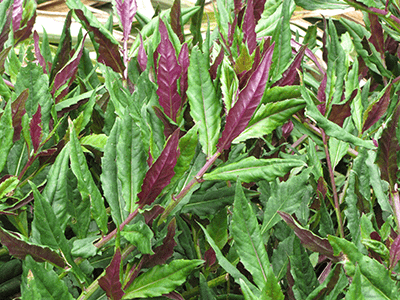
Okinawa spinach is another heat-tolerant, leafy green. These plants grow low, creating an edible groundcover. The flavorful leaves can juiced, added raw to fresh salads and smoothies, or steamed and used in stir fries, soups and quiches. Leaves and tender shoots have a mucilaginous quality (think okra), especially when cooked.
There are two species called Okinawa spinach; Gynura crepioides has green leaves and Gynura bicolor has green and purple foliage. This plant is in the Asteraceae family, the same family as sunflowers. It is native to Japan, northeastern India to Nepal, Myanmar and southern China.
Like its cousin from Malabar, Okinawa spinach is known by many additional names: Hung tsoi, dawn dewa, leaves of the gods, Mollucan spinach, handama, gynura, purple spinach and even “red vegetable.” In its native ranges, there are countless regional names as well.
The related longevity spinach (Gynura procumbens) grows as a groundcover as well, with fleshy stems and oval to lance-shaped leaves, which are eaten both raw and cooked. Experienced gardeners advise harvesting the leaves when still young and tender to eat raw. Longevity spinach has been utilized for many years in traditional Asian medicine; it’s called Bai Bing Cao in Chinese, which means “100 ailments” and in Malaysia, it’s called Sambung Nyawa, which means “prolongation of life.”1

Treated as annuals in cooler climates, both Okinawa and longevity spinaches can be harvested almost year-round in the tropics and subtropics, and grow best in zones 9-11. Cold temperatures will kill these tender plants. Some gardeners take cuttings and plant them inside for the winter.
These plants grow in full sun to partial shade, need average irrigation and reach 2 to 3 feet tall. Okinawa spinach produces yellow flowers and longevity’s flowers are orange, but don’t produce seeds. Any flowers should be cut off to help the plant focus energy on leaf production. The plants spread quickly but are not overly aggressive. Harvesting increases production, so the more you take the more you’ll produce. Harvest the leaves and the top 4 to 6 inches of shoots; plants can take a severe pruning.
Since they don’t produce seeds, plants are propagated by herbaceous stem cuttings. Just stick cuttings directly into the soil in your garden. Plants should be spaced 18 to 24 inches apart. These spinaches are also well-suited for container gardening.
For more information on growing tropical spinaches and other Florida-Friendly vegetables, contact your county Extension office.
Also on Gardening Solutions
More from UF/IFAS
- Fact Sheet: Okinawa Spinach — UF/IFAS Blogs Nassau County
- Florida Cultivation Guide for Malabar Spinach
Reference
- Tan, Hui-Li et al. “Gynura procumbens: An Overview of the Biological Activities.” Frontiers in pharmacology vol. 7 52. 15 Mar. 2016, doi:10.3389/fphar.2016.00052