
Crinums
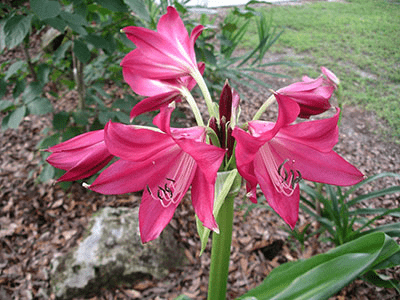
Crinum lilies are a hallmark of Southern gardens and have been cherished and cultivated by Florida gardeners for years.
Several species of Crinum and dozens of varieties allow you to find the right look for your landscape, with plants ranging in height from 13 inches to 6 feet tall depending on the species.
Characteristics
Crinums produce fragrant flowers that gently nod atop 2- to 5-foot stalks. During summer these plants will be at their most colorful; crinum flower colors vary depending on the species and variety and can be white, pink, deep rose, or even striped. During the rest of the year, a whorl of strap-like, evergreen foliage provides year-round interest in the yard. If you’re looking for a different foliage type, try one of the varieties with purplish leaves.
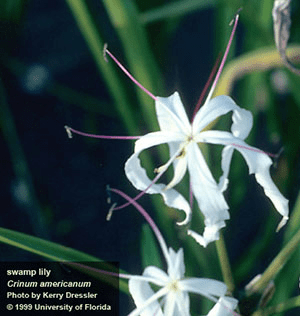
Crinums work well in the Florida landscape because of their easygoing nature. Many crinums have been known to grow for years on old home sites or cemeteries with little or no care. They are resistant to drought, although some also don’t mind having their feet wet. There are some 130 species in the genus Crinum, although many of those are not in cultivation. Crinum americanum, also called swamp lily, is a Florida native that works great on the banks of ponds and streams.
Planting and Care
While you can plant crinums year round , they are more likely to suffer from cold damage if newly planted when temperatures drop. Crinums have been known to thrive indefinitely so pick a place you’ll want to see them for years to come. While they may die back during an especially cold winter, their underground bulbs will help them spring back to life when the weather warms and rains return.
Plant your crinum bulbs up to their necks, the slender part of the bulb, in partial shade for best results. While they prefer part shade, crinums will grow just about anywhere. They are equally at home in dry sandy soils and on moist pond banks. Once established, your crinums will require little from you aside from occasional irrigation.
Crinums are often planted as border or bedding plants and the fragrant blossoms make great cut flowers. Planting a very low ground cover around your crinums can help these dramatic plants pop in your landscape. Remove old flowers as they begin to droop to keep your plants blooming and looking neat.
Another perk of crinums is that the plants are easy to divide, so you can add crinums to other areas of your yard or pass them along to a neighbor. Be aware that it may take a few years for the plants to reflower when planted from offshoot bulbs; plant divisions will bloom more quickly. Crinums are best divided in the winter when they are not actively growing. You can also dig around the clump, lift it, and then remove offshoot bulbs. Just be careful; while the bulbs you buy from the store generally only weigh a pound or two, some crinum bulbs can weigh up to 20 pounds!
Although they are generally easy to care for, crinums do have a few enemies. In some cases, crinums can be affected by red blotch fungus, which causes red spots on leaves, or crinum mosaic potyvirus, which causes yellow streaks in the leaves. Spider mites can sometimes be a problem. Crinums are also a favorite buffet item for the Eastern lubber grasshoppers. Watch for hatching in the spring and strive to control the young grasshoppers before they become adult eating machines!
Crinum lilies, like many other types of garden lilies grown in Florida, contain various toxic alkaloids and can cause poisoning if consumed.
For more information on crinums, contact your county Extension office.