
Camellias
Camellias have been a part of the southern landscape for almost 200 years.
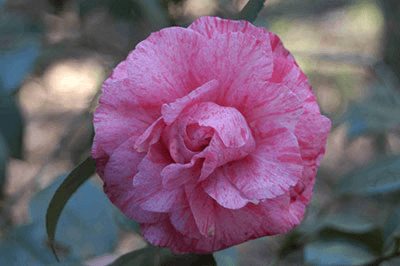
They are native to Asia and were introduced into the U.S. near Charleston, South Carolina in 1786. The common name camellia refers to varieties and hybrids of Camellia japonica and to the less known varieties of C. sasanqua and C. reticulate. Read more about sasanqua camellias.
Camellias can serve several functions in the landscape including foundation plantings, screens, accent plants, background groupings and hedges. Maximum benefit can be achieved by mass plantings or groupings.
Camellias flower in the fall and winter when their display of colorful blooms is most appreciated. During the remainder of the year their evergreen foliage, interesting shapes and textures, and relatively slow growth make camellias excellent landscape plants.
Selecting a Camellia
Many Florida gardeners aren’t aware of the sheer number of camellia varieties available. While the local big box garden store may only carry the common Camellia japonica, nurseries, public gardens, and even camellia societies can suggest many more.
Camellia plants vary widely in mature size and light requirements. They also bloom at various times, so if you’re looking for months of continuous blooms, you’ll want to select carefully.
Botanical gardens often display a wide range of camellia varieties that might inspire you. Or you can attend a camellia show sponsored by camellia societies and other garden clubs in the early spring to see the full range of your choices.
Camellias All Winter
The sasanqua types bloom as early as November, while the japonica types begin flowering later. Many gardens have at least one well-loved camellia, and a single plant will produce flowers for several weeks. But you can select a few different varieties, instead of just one, to extend the color in your landscape from weeks to months.
When purchasing camellias, research the bloom times of varieties for your area, or carefully check the plant tag. Purchase several different early, mid, and late-season camellias. Selecting camellias for staggered flowering times should give you color all fall and winter long.
Planting and Care
Camellias are long-lived shrubs, so it’s worth it to spend a little time thinking about where to plant them. Remember, you always want to put the right plant in the right place.
Most camellias will perform best if you plant them in a sheltered location where they receive partial shade, though some sasanqua camellia varieties will tolerate more sun if they receive adequate irrigation.
Camellias should be planted in a well-drained, preferably acidic soil and be watered regularly for the first year until they’re established. After that can typically survive on rainfall alone, though they’ll perform better if irrigated during dry spells.
Any pruning should be done before late summer when the flower buds form, though sasanqua camellias generally require only occasional grooming thanks to their slow growth and natural form.
Camellia Pest Problems
Camellias are tough, evergreen shrubs. If planted and cared for properly, they rarely develop serious disease problems, but they can be bothered by a few pests.
Problematic insects on camellias are tea scale, aphids, and spider mites. All three use piercing-sucking mouthparts to feed on the undersides of leaves. Tea scale appears as a fuzzy whitish coating on the bottom of leaves and triggers yellow speckling on top. Aphids cause leaves to curl and become distorted, and also cause sooty mold infestations. Spider mites are typically worse during hot, dry conditions and cause leaves to look rusty or whitish along leaf veins. To get rid of aphids or mites, try blasting your camellia with a garden hose a few times. Tea scale will require an approved horticultural oil spray.